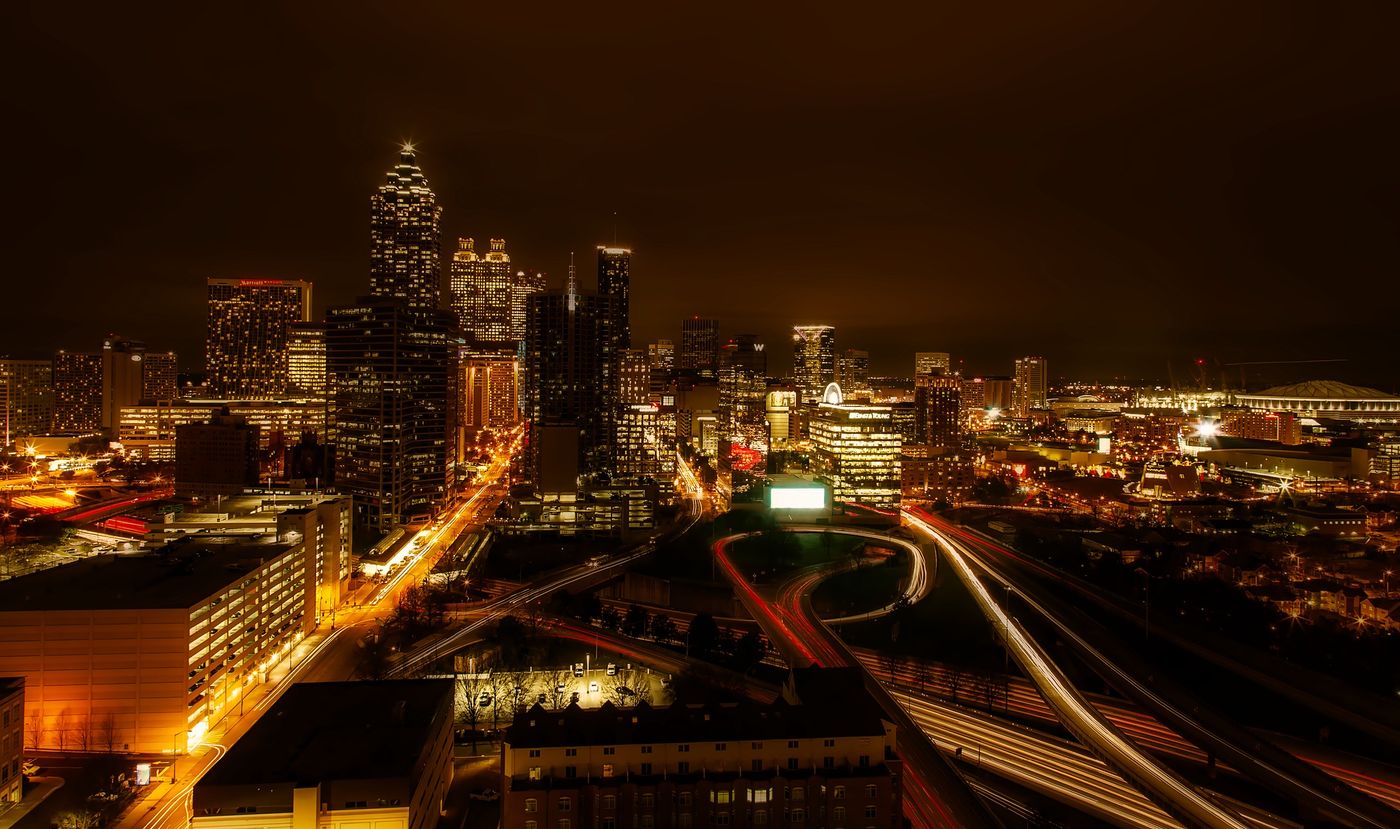
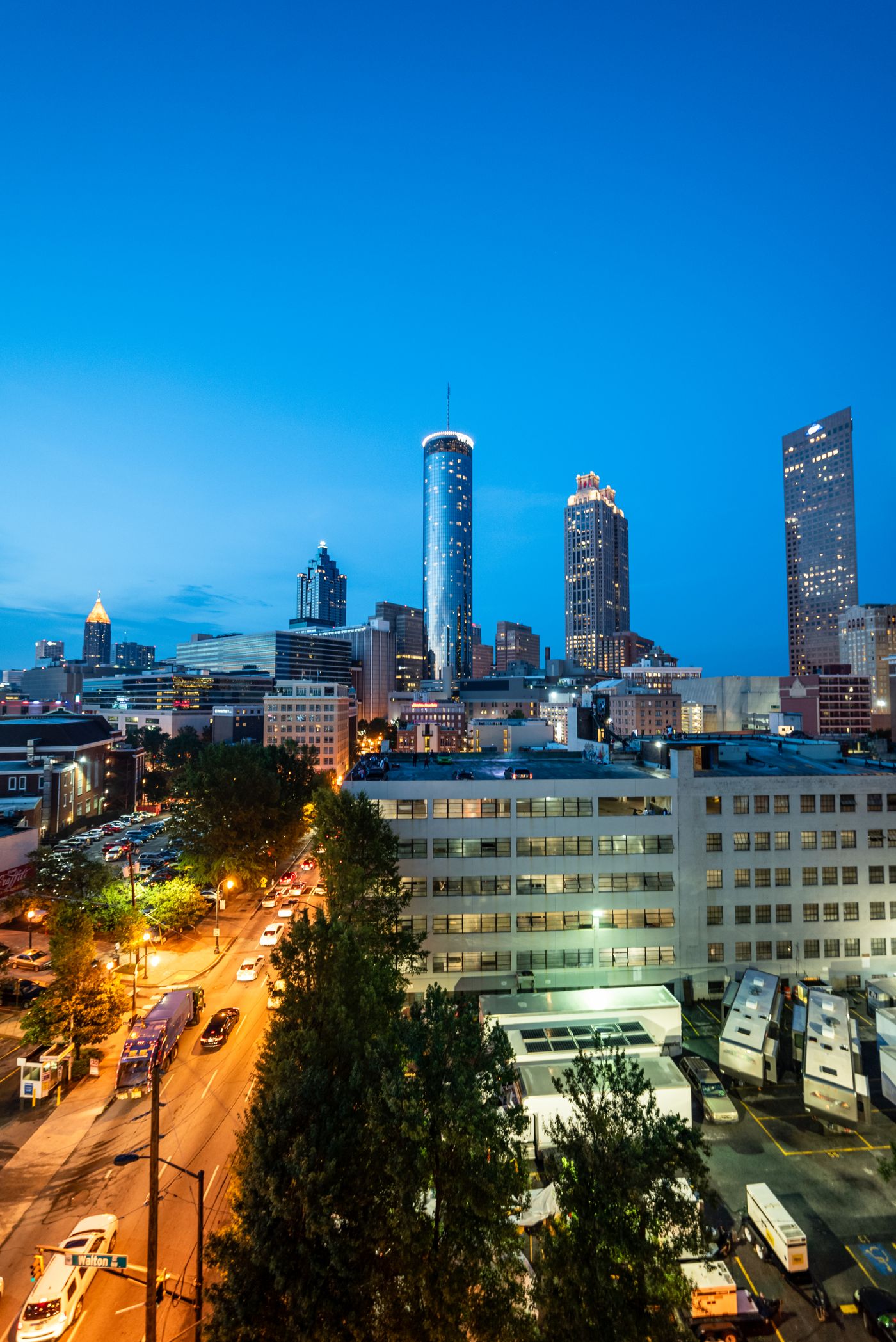
Autumn Saturdays in Atlanta are not like other Saturdays. The city fills with people who have come for one afternoon and leave the next morning, and the effect is visible from three miles away. Hotel rates climb. Trains run fuller. Restaurants that would seat you at seven on a Tuesday are booked out by Thursday. You do not have to care about the game to feel it. If your dates overlap with a home fixture, you are sharing the city with a crowd. This piece is about what that changes, and what you can do about it without buying a ticket.
What a football Saturday actually changes
The first thing that changes is the price of a bed. The neighbourhood medians on this site run from $94 to $158 across the city, and those are ordinary nights. A home football weekend pushes the same rooms harder, sometimes by half again. That is not a guess about supply and demand; it is what happens when tens of thousands of people want to be in the same few square miles on the same night. Downtown and Castleberry Hill feel it most because they sit closest to the ground. Midtown feels it too, because it is the default answer for anybody who wants a train. If you are booking on a game weekend, you are not choosing between neighbourhoods on quality. You are choosing on price and distance, and the two pull against each other.
The second thing is transport. MARTA does not stop running because of a game, but the stations near the ground get busy in a way that has nothing to do with a normal Saturday. Five Points, Garnett, Georgia State and the stations around the park all see heavier use. Trains are frequent, and the system is built to move people in and out of the centre, which is exactly what a game day asks of it. What you will notice is the platform, not the timetable. You will also notice that driving becomes a worse idea than usual. Streets near the stadiums close or turn one way, and parking that exists on a Tuesday may not exist on a Saturday. If you were planning to hire a car for the weekend, reconsider.
The third thing is dinner. Atlanta has a deep restaurant scene, and on a game weekend it absorbs a surge. Places that take walk-ins on a Wednesday are full on a Saturday, and not only near the ground. Midtown, the Old Fourth Ward and Inman Park all fill. The pattern is predictable: early seatings go first, then the late ones, and the middle of the evening is the hardest to book. If you want a specific restaurant on a specific night, you need to plan further ahead than you would otherwise. If you are flexible, you will eat well. The city is not short of kitchens, and the crowd is concentrated rather than spread. You just have to accept that the obvious places will be the ones that fill first.
The fourth thing is the shape of the day. A football Saturday has a rhythm. Morning is quiet. Early afternoon is when the city tilts toward the ground, and late afternoon is when it tilts back. Evening is when everybody who did not go to the game is out, which means the restaurants and bars are busy in a way that has little to do with football. If you are not going to the game, the best hours are the ones when everybody else is at it. That is the whole trick of a game weekend, and it costs nothing. You do not need a ticket to benefit from thirty thousand people being somewhere else. You only need to know which hours they have taken.
What to do on a football Saturday
The honest caveats about game weekends
The main caveat is that this piece cannot tell you which Saturdays are affected. Fixtures move. A game that looks like a home Saturday in the summer can shift, and television decides more of the calendar than anybody would like. We do not print dates, and you should not rely on any general claim about autumn weekends. Before you book anything, check the schedule for the dates you are considering. If a home fixture falls on your weekend, assume the city will be busier than usual. If it does not, you can treat the weekend as a normal one. The difference between those two weekends is large, and it is not something a page like this can resolve for you. Check the schedule, then check it again closer to your date.
The second caveat is that a game weekend does not suit everybody. If you want a quiet Saturday, a cheap room and a table without a booking, a home fixture is the wrong weekend. The same applies if you are travelling with somebody who finds crowds difficult, or if your plan depends on driving into the centre. It also applies if you are coming for a specific restaurant or a specific museum and you have limited time. You can still have a good weekend, but you will be working around a crowd rather than with one. If your dates are flexible, the simplest advice is to move them. The city is the same city on a non-game Saturday, and the prices are the ones on this site rather than the ones a fixture creates.
The third caveat is that we are writing from published information rather than from the ground. We have not stood on a platform on a game day, and we cannot tell you what it feels like when a train arrives full. We can tell you which stations serve which neighbourhoods and how the system is laid out, because that is published. We cannot tell you how long you will wait, how crowded a specific carriage will be, or whether a particular bar will have a queue at eight. Those are things that vary by fixture, by weather and by kick-off time. You should treat the neighbourhood guidance as a way to narrow your choices, not as a prediction about your specific Saturday. The schedule is the variable that matters most, and only you can check it.
The fourth caveat is about money. The only figures on this page are the neighbourhood medians, and those are ordinary nights. They are a way to compare areas, not a quote for your dates. A game weekend can move rates well above those numbers, and the movement is not uniform: some neighbourhoods rise more than others, and some barely move. We do not print prices for hotels, tickets, trains or meals, because we cannot verify them and they change. What you should do is take the medians as a starting point, then check actual rates for your dates once you know whether a fixture falls on them. If the difference between a game weekend and a normal one is too large, that is useful information. It tells you to move your trip rather than pay it.
What to do about it
The first move is to book the neighbourhood rather than the stadium. The list on this page already sets that out, and it is the right frame. If you want the cheapest bed and the easiest train, look at Downtown, where the median is $118 and Five Points puts you on every line. If you want the most useful location for a general visit, Midtown at $142 is the default for a reason: two rail stations, the park, the High, and the trail four blocks east. If you are on foot and want to be near the ground, Castleberry Hill at $112 is ten minutes away and quiet on a non-event night. Summerhill at $121 gives you new rooms and a twenty-minute walk into downtown. Choose one of those and you have solved most of the weekend.
The second move is to take the train and leave the car. This is not a moral preference; it is what the system is built for. MARTA moves people in and out of the centre on a game day, and the stations near the ground are the ones that matter. If you are staying in Midtown or Downtown, you are already on the right lines. If you are staying in Summerhill or Castleberry Hill, you are close enough to walk. What you should not do is drive to the ground, because the streets around it close or turn one way and the parking you might find on a Tuesday is not there on a Saturday. A hire car is a liability on a game weekend. Use it for the days either side, or not at all.
The third move is to eat early or eat far. The restaurants that fill first are the obvious ones, and they fill from the middle of the evening. If you have a place you want, book it as soon as you know your dates. If you are flexible, eat early, before the crowd tilts back from the ground, or eat in a neighbourhood that is not on the direct path. The list gives you options: Summerhill, Castleberry Hill and Downtown all have their own kitchens. The Old Fourth Ward and Inman Park are worth the train ride if you want a wider choice. What you should not do is leave dinner to chance on a game Saturday and expect to walk into the first place you see. You will not, and you will spend the evening looking.
The fourth move is to use the hours when everybody else is at the game. Morning is the best of them. Walk the trail, which is four blocks east of Midtown and within a mile of most of the neighbourhoods on this list. The BeltLine is at its best before the city fills, and on a game Saturday that window is wider than usual, because the crowd is heading somewhere else. Spend the afternoon at a museum, in a park or in a neighbourhood that is not on the stadium side. The High, the King Center and the Center for Civil and Human Rights all keep their own calendars, so check their pages for your date. Then come back out in the evening, when the crowd has gone home and the city is yours again. You do not need a ticket for any of that.
This page is compiled from published information and our own neighbourhood checks. We have not visited Atlanta, and nothing here is based on a stay, a meal or a train ride. Prices, opening hours and anything that moves week to week are not printed. What cannot be measured from a desk is how a specific game day feels: how full the platforms are, how long the queues run, how the city tilts when the crowd moves. Check the venue's or the operator's own page for your date, and check the fixture list before you book. Nothing on this page is paid placement.
Read the method ↗