Piedmont Park is the city's front lawn, and golden hour is when it earns the name. Two hundred acres of open ground sit in Midtown with the skyline rising directly behind the meadow, so the last light of the day comes across the grass and hits the towers from the side. This page is about giving one evening to that, not about covering the whole park. Come in an hour before sunset, pick your slope, and let the light do the work.
The golden hour route
Why golden hour works here
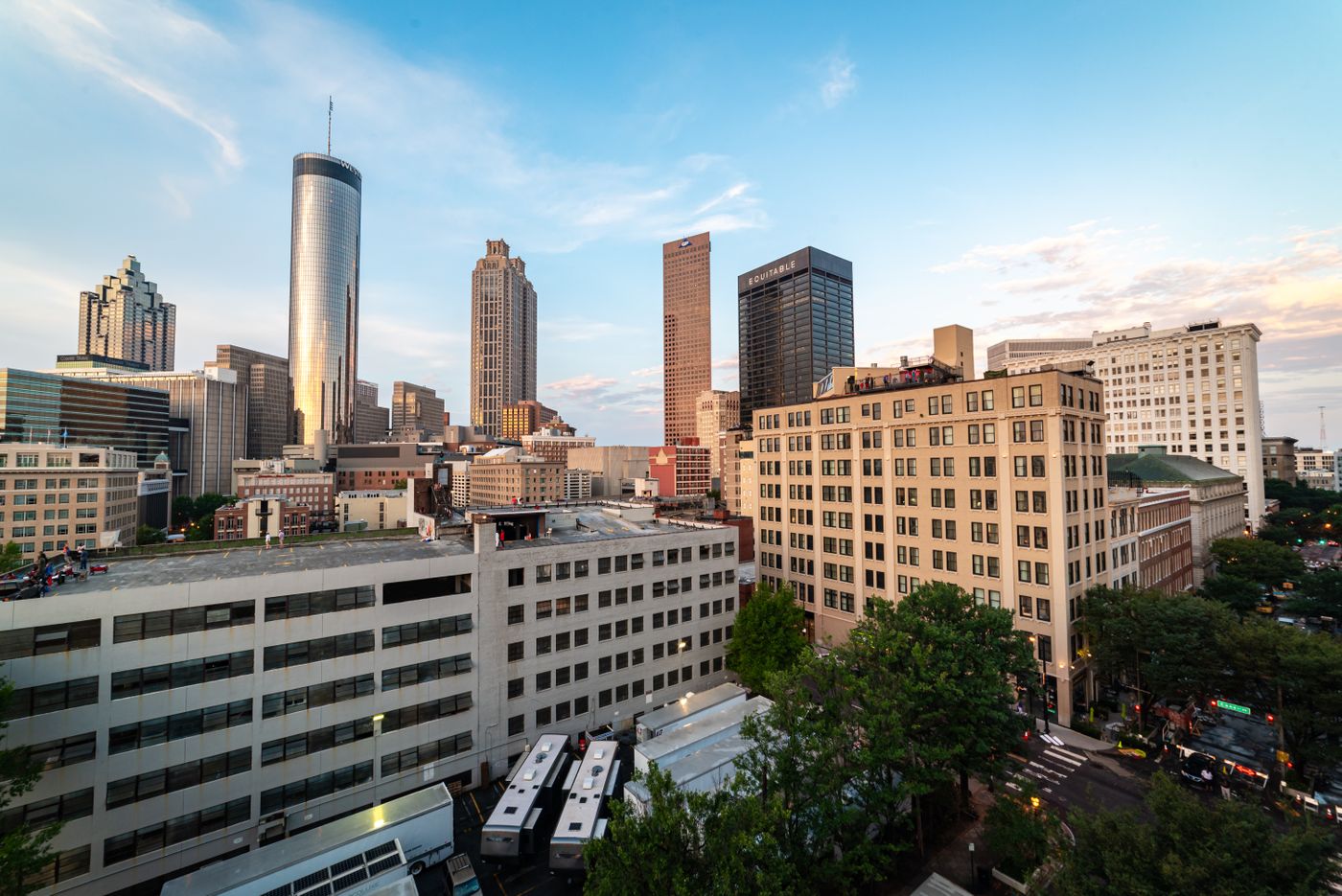
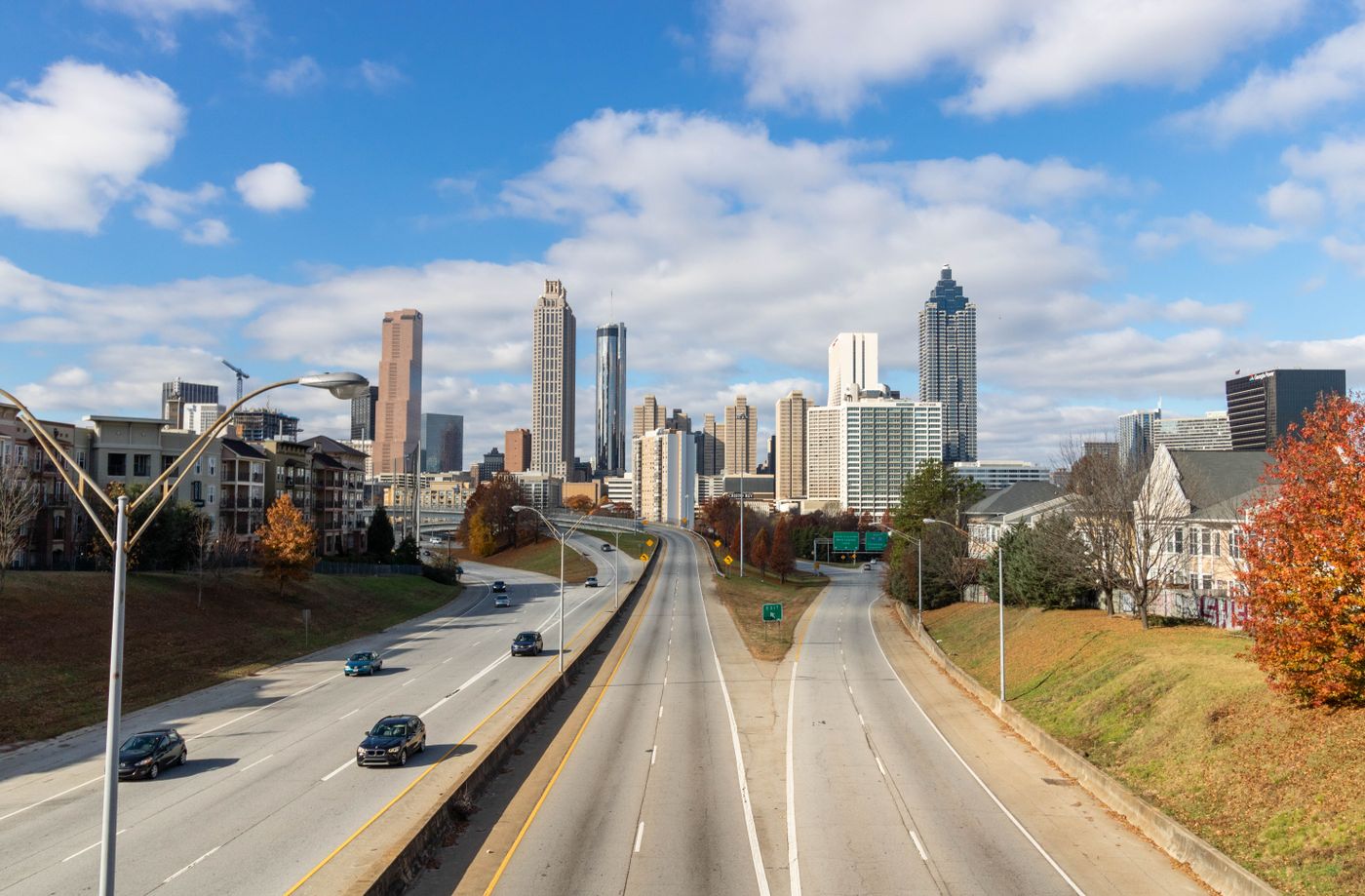
The reason golden hour lands so well in Piedmont Park is the geometry of the place. The long open meadow runs roughly north to south with the Midtown towers standing off to the north and west, and the sun drops behind that skyline in the evening. That means the last strong light does not fall straight down onto you. It comes in low and sideways across the grass, catching the tops of the buildings first and then spilling onto the slope where most people sit, so you get warm light on the ground at the same time as you get silhouettes above it. Very few city parks have that arrangement by accident, and this one has it because the park was laid out before the towers arrived.
The second thing working in your favour is the size of the open ground. Two hundred acres is enough that the crowd spreads out. The meadow slope is the obvious place to sit and it draws the most people, but it is wide, and the tree line around it takes the overflow without anyone feeling they have been pushed to the edge. You do not need to arrive early to claim a spot in the way you would at a ticketed viewpoint. What you need is to be there before the light turns, because the good part is short and it does not wait for latecomers. Arriving at the moment of sunset gets you the afterglow and misses the reason to come.
The third factor is that the park does not empty out at dusk the way a lot of green space in American cities does. Paths stay busy into the evening, the gates stay open, and there is enough foot traffic that sitting on a slope as the light goes is a normal thing to be doing rather than a decision you have to justify. That matters if you are on your own, and it matters if you are showing a visitor around and want the evening to feel easy rather than staged. The park is free, there is no turnstile and no closing announcement chasing you out, so the whole thing costs you nothing but the walk in and the hour you give it.
Getting in and getting out
The 10th Street gate is the one to aim for if golden hour is the plan. It puts you on the eastern side of the park with the meadow ahead of you and the skyline behind it, which is the correct orientation for the light. Midtown station on the Red and Gold lines is the nearest rail stop, and from there it is a short walk west into the park, flat the whole way. If you are staying in Midtown itself, you are already close enough that this is an evening stroll rather than a trip. Nobody needs a car for this, and bringing one adds a parking problem you can avoid entirely.
The effort involved is genuinely small, which is part of why this is on the list. You are not hiking anywhere. The ground from the gate to the meadow slope is paved or mown, and the slope itself is grass that takes a blanket or a jacket to sit on without discomfort. Allow the best part of two hours if you want to walk a loop as well as sit, and an hour if you are only there for the light. Bring water in summer, because the park is exposed and the evening does not always cool down quickly. In the cooler months, bring one more layer than you think you need, because sitting still on a slope as the sun goes is colder than walking.
Getting out is the part people underestimate. The light goes, the park stays open, and the paths back toward the 10th Street side fill up with everyone leaving at once. If you are heading for the station, walk with that flow rather than against it and you will be fine. If someone is collecting you by car, agree the meeting point before you go in rather than trying to describe your position in a dark park over the phone. The Botanical Garden inside the park is a separate ticket and a separate afternoon, so do not fold it into this evening. Treat the gate as your start and finish and the whole thing stays simple.
What the light actually does
The light here does two things in sequence and they look quite different. First there is the warm pass, when the sun is still above the skyline and the meadow is lit from the side. Grass goes gold, the near sides of the towers catch colour, and everything on the slope reads clearly. This is the phase people mean when they talk about the park at golden hour, and it is the one worth planning around. Then the sun drops behind the buildings and you get the second phase, which is flatter and cooler, with the sky still bright and the ground going grey. Both are good. They are not the same photograph, and knowing which one you came for changes when you should arrive.
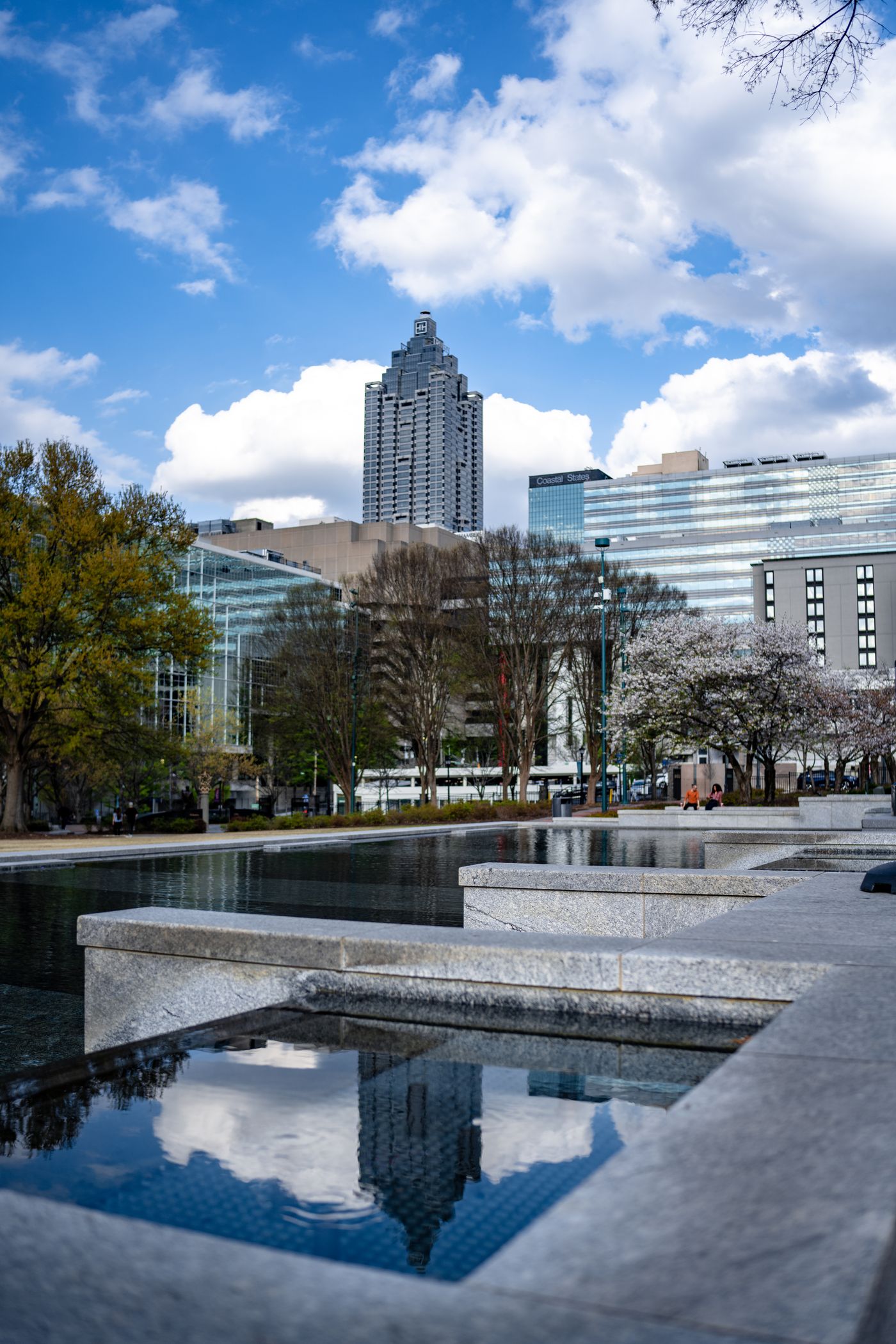
Water changes the picture more than any other feature in the park. Lake Clara Meer sits low and holds reflections, so on a still evening the skyline appears twice, once upright and once upside down. That is the shot most visitors are chasing, and it is the one that most depends on conditions you cannot control. Wind breaks the surface and the reflection goes. Cloud over the western horizon kills the warm pass entirely and leaves you with a flat grey evening. There is no way to guarantee the light. What you can do is give yourself the best odds by coming on a clear evening, arriving with time to spare and accepting that the park is still a good place to be when the light does not perform.
The slope faces the right way for all of this, which is why it fills first. If it is crowded, move along it rather than up into the trees, because the tree line cuts the view of the towers and puts you in shade earlier. The Active Oval, away to the north, gives you more open sky but loses the skyline framing. The Botanical Garden edge gives you planted foreground and a different composition again, and it is the one to consider if you have already done the meadow and want a second evening that feels like a different place. Pick one and commit to it rather than walking between them while the light goes.
Mistakes people make
The biggest mistake is treating this as a full afternoon. Piedmont Park rewards a whole day if you want one, but golden hour is a specific and short event, and people who arrive at midday and stay for it are usually too tired to enjoy it. Come for the hour, sit down, and leave when the colour goes. The second mistake is arriving exactly at sunset, which means you have already missed the warm pass and are watching the afterglow. Work backwards from sunset rather than forwards, and give yourself time to walk in and settle before the light turns.
Another common error is over-packing the evening. The Botanical Garden is a separate ticket and a separate afternoon, and trying to add it to a golden hour visit means you are rushing one thing to reach the other. The same goes for dinner plans timed to the minute. Leave the rest of the evening loose. People also underestimate how quickly the temperature drops once the sun is behind the towers, and they turn up in summer clothes in October and regret it by the time the light is at its best. A layer costs you nothing to carry and saves the evening.
This is not for everyone, and it is worth saying so. If you want a structured attraction with an entrance, a map and something to look at indoors, an open meadow will bore you. If you cannot sit on the ground, the slope is not comfortable, though there is seating around the edges and paths to stand on. If you need guaranteed results from a photograph, the weather will let you down roughly as often as it delivers. And if you dislike crowds, the meadow at golden hour on a clear weekend is not a quiet place. Go anyway, on a weekday, and it is a different park.
This page is compiled from Piedmont Park's published information and Stay Atlanta's own neighbourhood checks, not from a visit. Opening hours, ticket releases and prices are not printed here because they change, and a wrong figure wastes somebody's morning. One thing no desk can measure is how the last light behaves on a given evening: wind on Lake Clara Meer, cloud over the western horizon and the exact minute the sun clears the towers all decide what you actually see. Nothing on this page is paid placement, and no venue was told it was being written about.
Read the method ↗