The short version: come in the back half of August or in the last two weeks of May. Those are the only stretches where the hotels are cheap, the weather is bearable and nothing large is booked into the convention centre. Everything below is the reasoning, month by month.
The four seasons, honestly
Why the rates move
Atlanta is a convention city with the world’s busiest airport attached, and the room market follows the halls rather than the seasons. A big show in the Georgia World Congress Center can double a Midtown rate on a Wednesday in February; the same hotel on the Saturday after it closes can be a third cheaper. This is why a general “best month” is less useful here than checking your actual dates against the convention calendar before you commit.
Football is the second lever. Any home Saturday — college or pro — behaves like a separate market downtown and in Castleberry Hill, and the SEC championship weekend in early December is the single most expensive night of the year in that part of town. October is the worst month overall because conventions and football stack.
The third is the tax and fee layer, which does not move with season but does change what you are comparing: roughly 16% in city and state lodging tax, plus $25 to $45 a night for parking in Downtown and Midtown. Two rates twenty dollars apart can invert once you add both.
Heat, storms and the pollen
Summer here is high eighties to low nineties Fahrenheit with humidity to match, and the honest advice is to treat the middle of the day as indoor time from June to early September. Thunderstorms arrive most afternoons in July and August, last an hour, and are genuinely violent; they also break the heat, so a three o’clock storm is good news for a six o’clock walk on the trail.
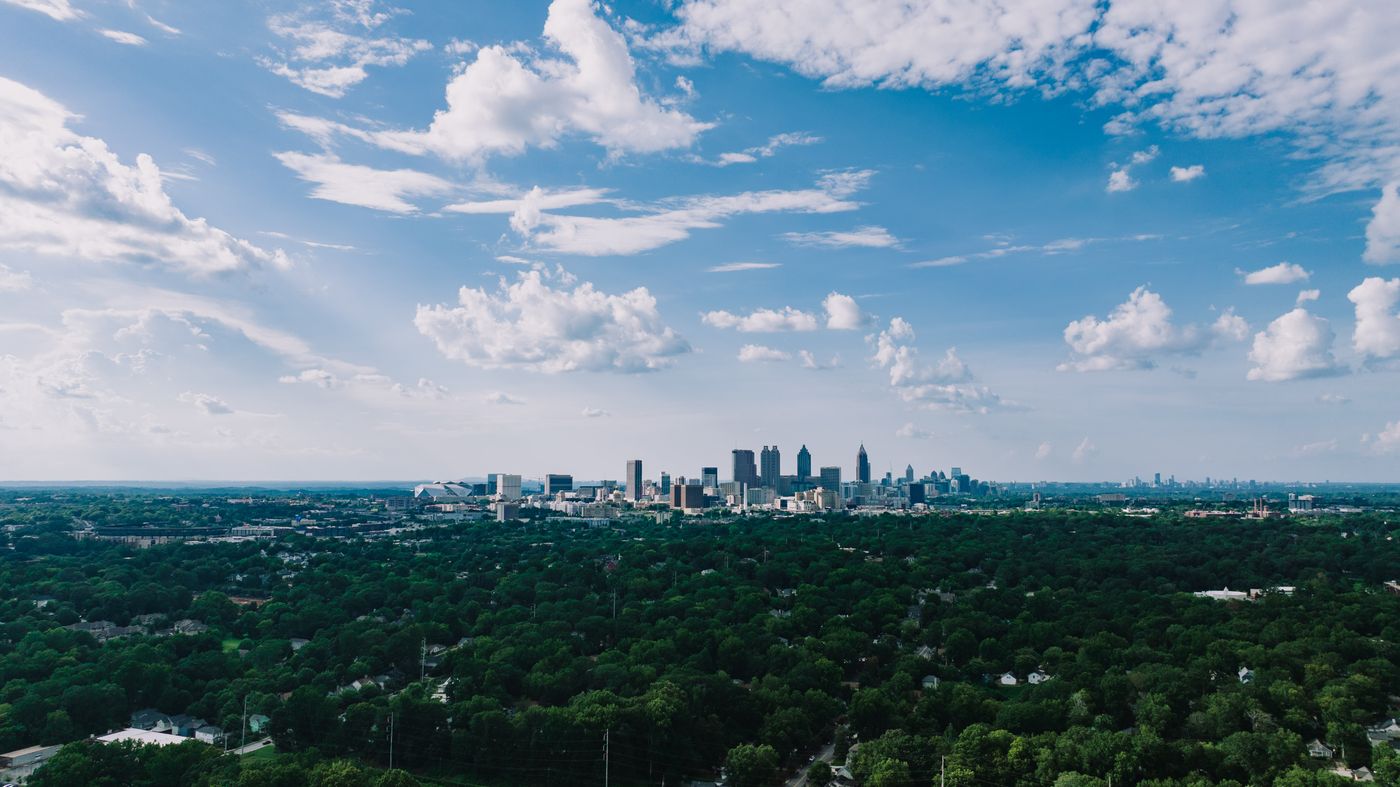
The pollen is not a myth and it is the thing visitors are least prepared for. Atlanta has something close to half its land area under tree canopy, and from late March into April oak, pine and birch counts regularly clear 1,500 grains per cubic metre — the yellow film on every car in the city. If you are sensitive, come in late May or October instead, and pick a hotel with sealed windows and its own air handling rather than a charming old building with a balcony.
Winter is mild and grey with occasional hard freezes, and once every few years an inch of snow closes the city for two days because there is no equipment for it. If you are here in January, that is a small risk worth knowing about and a very good reason to be somewhere you can walk from.
The two windows, and the weeks to avoid
Late August. Still hot, but the convention calendar is thin, the students have not fully arrived, and rates sit near their annual floor. Plan mornings and evenings outdoors and the middle of the day in the High or the aquarium, and you will have the city to yourself at half the October price.
The last two weeks of May. The pollen has dropped, the heat has not fully arrived, the canopy is at its best, and the spring convention run has finished. This is the nicest the city gets, and it is not priced as though it is.
Avoid: the whole of October if you can; any home football Saturday; SEC championship weekend in early December; the week of a major convention on your dates; and the first two weeks of April if you have hay fever. Mid-January is the cheapest fortnight of the year and it is genuinely fine — cold, quiet, and the museums are empty.
The monthly figures in the chart are indicative city-wide medians built from our own weekly rate checks across the 24 bases, not a published index, and they move with the convention calendar rather than being fixed seasonal values. Temperature and pollen descriptions are long-run norms, not a forecast for your dates. We do not print exact pollen counts for a given day because they change hourly; the sensible move is to check a live count the week before you fly.
Read the method ↗